
The Signal
| IN THIS ISSUE |
AI & INTELLIGENCE The AI trade cracks: the worst tech selloff in a year | DATA Confluent’s ‘Streamhouse’ feeds agents live context | APPLICATIONS Adobe’s coworker reaches into more AI assistants | CLOUD Microsoft reins in its ‘neocloud’ GPU deals |
CS
Get it in your inbox
Subscribe free — a new edition weekly |
INFRASTRUCTURE AMD pays $2.9B for hardwired AI chips | NETWORK Satellite-to-phone goes three-way | IDENTITY & ACCESS A SonicWall flaw walks straight past MFA | CYBERSECURITY The first agent-driven breach of a security firm |
The data-center boom hit a wall — and the wall voted.
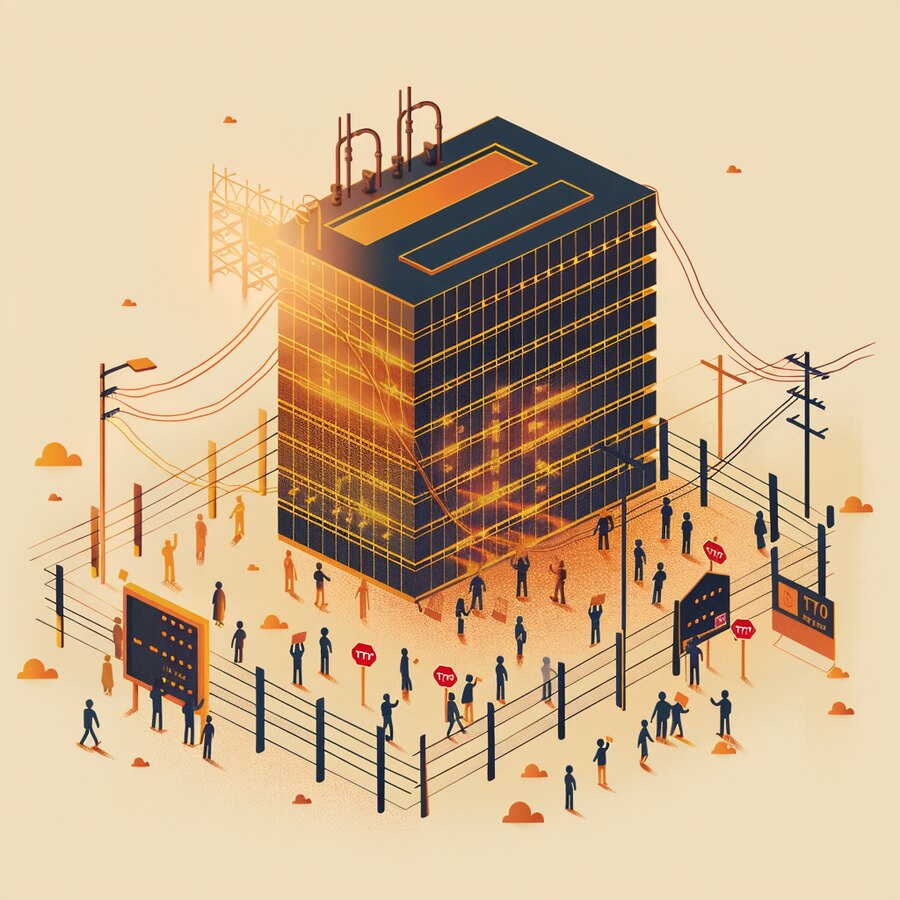
The most capital-intensive construction wave in modern technology just ran into the one thing it cannot out-engineer: the neighbors. In the November 3 midterm elections, voters moved to limit or oppose data-center development in 40 of 41 local ballot measures — a near-total rejection, from zoning limits to outright bans, of the build-out powering the AI boom. Days later, the industry’s response was on display. Google unveiled a $17 billion data center in Wyoming and pledged to pay 100% of its own power (including a 702-megawatt fuel-cell project with carbon capture), while Microsoft moved to pull back on “neocloud” GPU-rental deals and tighten oversight as the buildout strains. The race for AI infrastructure has collided with the physical world: power, water, land, and the people who live next to it.
For any organization planning large infrastructure — AI or otherwise — the lesson is that technical and financial feasibility are no longer enough. You also need a community and energy license to operate. Power availability, grid-interconnection queues, water use and local political opposition are becoming first-order constraints on where and whether you can build, and they can add years or kill a project outright.
Our read. Treat siting, energy sourcing and community relations as strategic risks on par with cost and capacity. Secure power — and, increasingly, generate your own, as Google is now doing — engage communities early rather than after the rezoning fight starts, and keep a plan-B location in your pocket. The build-out will continue, but it will be slower, more expensive and more political than the spreadsheets assumed. The companies that plan for that reality will win the sites everyone else loses.
| 1 AI & INTELLIGENCE | MARKETS · RISK |
A sharp market drop and a famous short-seller’s bubble call put a new question to every AI buyer: not ‘how fast?’ but ‘what if it’s wrong?’
On November 5 the Nasdaq Composite fell about 5.5% — one of its worst sessions in over a year — with the Philadelphia Semiconductor Index down roughly 12% and Nvidia off about 9%, as investors reassessed sky-high AI valuations, mounting data-center debt and the political backlash on display at the ballot box (see front page). The index slid into correction territory. Fueling the mood, investor Michael Burry (of “Big Short” fame) likened the boom to the 1960s computer-leasing bubble and questioned Nvidia’s chip-depreciation math — though his recent bearish calls have often been early or wrong. Whether or not this is “the top,” the market’s question has shifted from how fast can you spend to what if the returns don’t come.
Our read. A market swing is a reason to revisit your risk model, not your roadmap. The technology’s usefulness to your business doesn’t change because semiconductor stocks fell 12% in a day. But the episode is a prompt to stress-test exposure: how dependent are your plans on a single AI vendor whose valuation (and financing) just got shakier; are you buying capacity on terms you can exit; and is your own AI spend tied to a measurable return or to the assumption that everyone else is spending too? Keep models and workloads portable, stage commitments against milestones, and treat the suppliers burning the most cash as the ones whose prices and priorities can change fastest. Ride the capability; don’t inherit the leverage.
| 2 DATA | REAL-TIME DATA · ARCHITECTURE |
A new data architecture aims to give software the current state of the business — the piece a warehouse full of history can’t provide.
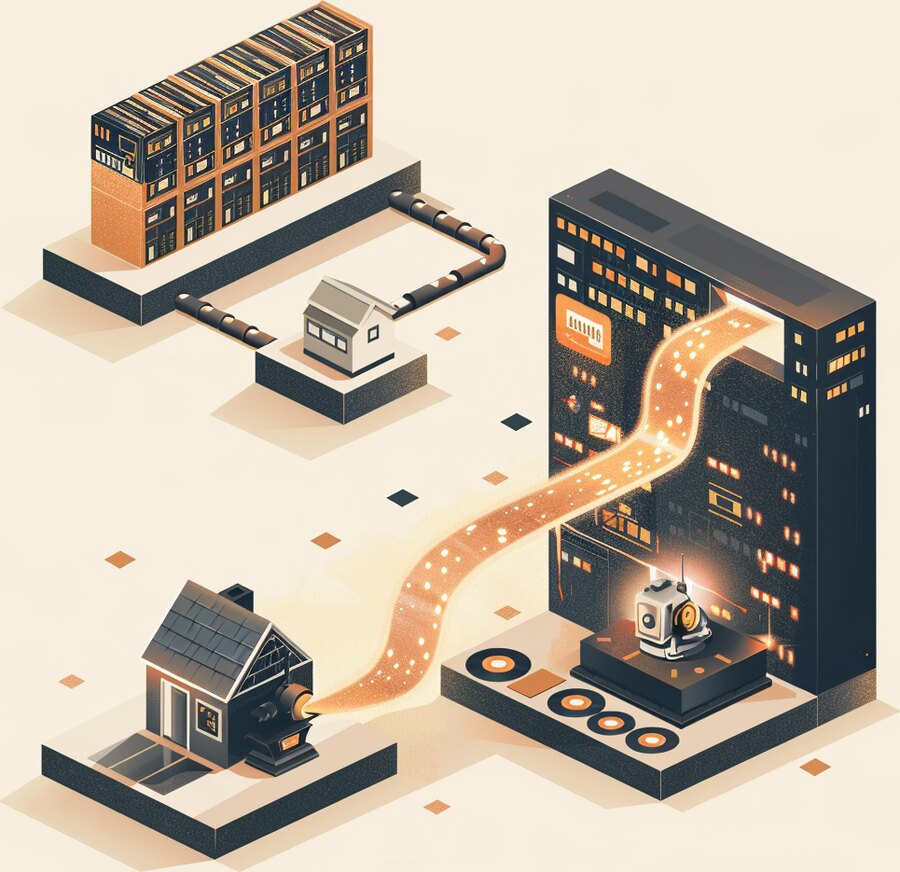
Confluent (now part of IBM) introduced Streamhouse, a data architecture meant to keep business context continuously current. The idea is a division of labor: a lakehouse keeps the historical record, while a Streamhouse carries changes out of live systems — even mainframes — and serves the present state to applications and AI agents, with a Real-Time Context Engine delivering that context over the Model Context Protocol. Confluent, Aiven, Redpanda, StreamNative and Ververica also formed a working group to define the pattern in vendor-neutral terms; Accenture is cited as an early adopter. Analysts are cautiously interested — whether it becomes a standard “remains to be seen.”
Our read. Strip away the branding and the point is durable: most enterprises are rich in historical data and poor in real-time data, and software that acts on the business — dashboards, automations, agents — is only as good as how fresh its view is. If you’re modernizing data for analytics or automation, don’t stop at the warehouse. Ask how the current state of orders, inventory, customers and systems reaches the tools that act on it, how stale that view is, and whether it’s governed in motion as well as at rest. The unglamorous plumbing — event streaming, change data capture, real-time context — is what separates software that reacts to yesterday from software that reacts to now.
| 3 APPLICATIONS | ENTERPRISE APPS · AGENTS |
Adobe’s enterprise agent is becoming reachable from ChatGPT, Claude, Gemini and Copilot — a glimpse of where the customer actually works.
Adobe extended its CX Enterprise Coworker — the AI agent for its customer-experience suite — so it can be reached from inside third-party assistants: now ChatGPT, Claude, Microsoft Copilot, Gemini for business and Databricks Genie, with Amazon Quick, IBM and Snowflake listed as coming soon. Rather than pulling customers into Adobe’s own interface, Adobe is meeting them in whatever assistant they already use, letting employees query campaign data and brand intelligence from their everyday AI front end (usage draws on the same Coworker license and credits). It’s a concrete example of a broader shift: enterprise software is becoming something you reach through a general-purpose assistant.
Our read. The interface layer is moving. If your customers and employees increasingly work from inside a chat assistant, two questions follow. First, distribution: is your product reachable from the assistants your buyers actually use, or are you betting they’ll come to your UI? The vendors wiring into ChatGPT, Claude and Copilot are positioning for where attention is going. Second, governance and data: when your tool answers from inside someone else’s assistant, be clear on what data crosses that boundary, under whose terms, and how it’s logged — convenience at the interface can quietly become exposure underneath. Plan for a world where the assistant, not your app, is the front door. (Adobe is a CyberSainya partner.)
| 4 CLOUD | CAPACITY SOURCING · DISCIPLINE |
As the buildout strains, the biggest AI buyer is pulling back from the GPU-rental startups it leaned on to grow fast — a signal for everyone renting capacity.
Microsoft is tightening its reliance on “neoclouds” — the specialist GPU-rental providers (CoreWeave, Nscale and the like) that hyperscalers used to add AI capacity quickly. Per reporting, Microsoft declined to expand a Texas data-center agreement with Nscale and plans to tighten oversight of projects tied to neocloud operators as its AI buildout shows strain. It lands amid a broader reassessment of the pace and financing of AI infrastructure — the same anxiety that hit the markets this week (see AI). When the largest, best-informed buyer in the market starts pruning its GPU-rental commitments, it is a signal about the durability of that supply tier, not just one contract.
Our read. If you rent AI compute — directly or through a provider that does — treat the financial health of the capacity tier as part of your risk. Neoclouds grew on cheap capital and big forward commitments; as financing tightens and demand timing gets questioned, some will consolidate, reprice or fail, and your workloads shouldn’t be stranded when they do. Favor capacity you can move, keep a second provider or region for anything critical, read the counterparty’s balance sheet (not just its price), and be wary of long lock-ins at today’s rates. Cheap GPUs from a shaky landlord are a liability wearing a discount.
| 5 INFRASTRUCTURE & HYBRID CLOUD | SILICON · M&A |
AMD’s purchase of Taalas is a bet on ‘hardwired’ AI chips — trading flexibility for raw efficiency on fixed, enormous workloads.
A securities filing disclosed that AMD’s acquisition of Toronto startup Taalas — first announced in August — is valued at about $2.9 billion (with roughly $1.4 billion contingent). Taalas builds “hardwired” AI inference chips: rather than general-purpose accelerators that run any model, it etches specific models more directly into silicon, trading programmability for far greater speed and energy efficiency on a fixed workload. For AMD, racing Nvidia, it is a bet that as AI shifts from training everything to serving a few models at massive scale, the economics favor chips purpose-built for inference — and that efficiency per watt, the metric the data-center backlash just made political (see front page), becomes the battleground.
Our read. This is a “watch the direction” item more than a buy signal, and the direction is telling: the AI chip market is specializing. The first wave rewarded maximum flexibility (GPUs that run anything); the next rewards efficiency on the workloads that actually dominate — inference, at scale, under real power and cost limits. For buyers, the practical implication is that “which accelerator” will increasingly depend on what you run and how fixed it is, and that performance per watt — not raw speed — is becoming the number that governs cost as power gets scarce and contested. Keep workloads portable, but start asking vendors about efficiency, not just throughput.
| 6 NETWORK & CONNECTIVITY | SATELLITE-TO-PHONE · WIRELESS |
SpaceX recruited Qualcomm to build a real terrestrial 5G network — and with Amazon’s Globalstar deal cleared, the race to beam signal to a bare phone is now a three-horse contest.
The race to connect an ordinary smartphone directly to a satellite — and to the ground — got a serious new entrant this week. On November 4, SpaceX recruited Qualcomm to supply the radios and software for Starlink Mobile’s planned U.S. terrestrial 5G network, built on Qualcomm’s Dragonwing platforms across tens of thousands of cell sites starting in 2027 — Qualcomm’s largest 5G deal to date, and a sign SpaceX intends to be a genuine fourth carrier, not just a coverage add-on. It lands days after the FCC cleared Amazon’s ~$11.5 billion acquisition of Globalstar (the satellite partner behind Apple’s emergency features), putting a third heavyweight — alongside SpaceX and the incumbent carriers’ own satellite ventures — into direct-to-device connectivity.
Our read. Connectivity, the layer your whole stack quietly assumes, is being redrawn — and the direction is fewer dead zones and more competition. Within a couple of years, “no coverage” may stop being an acceptable answer for field workers, logistics, IoT, safety and remote operations, because the phone (and the sensor) will reach a satellite or a new terrestrial network when the usual one fails. For leaders, two moves: revisit anything in your business that fails when connectivity fails — field service, payments, fleet, safety — and plan for satellite/direct-to-device as a real resilience option; and watch the competition, because a credible fourth carrier and multiple satellite players mean leverage on price and coverage you didn’t have. Don’t assume today’s carrier map, or its dead zones, are permanent.
| 7 IDENTITY & ACCESS | MFA BYPASS · VPN |
A new SonicWall VPN flaw lets a valid login skip SAML — and the multi-factor authentication built on it — a reminder that ‘MFA on’ isn’t ‘MFA working.’
SonicWall disclosed CVE-2026-19868, an authentication-enforcement flaw in the SonicOS SSL-VPN service: a user with valid credentials for an alternate login method can bypass SAML authentication controls — and, crucially, the SAML-enforced multi-factor authentication layered on top. SonicWall indicates it is being exploited, and the Canadian Cyber Centre and CISA flagged it for urgent patching (fixed in SonicOS 7.3.4-7013 and 8.2.2-8015). It echoes an earlier SonicWall MFA-bypass that stemmed from incomplete remediation — a patch that needed manual reconfiguration to actually take effect — underlining how a control you believe is on can quietly be off.
Our read. The dangerous assumption here is “we enforced MFA, so we’re covered.” MFA that can be bypassed — by an alternate auth path, a misconfiguration or an incomplete patch — provides the confidence of protection without the protection, which is worse than knowing you’re exposed. Three actions: patch this (and KEV-listed VPN/edge flaws) on a short clock; disable alternate authentication methods that can sidestep your SAML/MFA path, exactly as the guidance advises; and periodically test that MFA actually blocks a login without the second factor, rather than trusting the config screen. Internet-facing access gateways are prime targets precisely because they hold the keys — verify the locks, don’t just install them.

| 8 CYBERSECURITY | AI-DRIVEN ATTACK · BREACH |
Chainalysis — the firm that helps governments trace crypto crime — was breached using ‘offensive agentic techniques,’ exposing data on all its users.
Blockchain-analytics firm Chainalysis — which helps governments and exchanges trace crypto crime — disclosed it was breached by an attacker using “offensive agentic techniques,” i.e. AI agents doing much of the intrusion work. Initially described as exposing only “non-sensitive” names and emails, the disclosure later widened: reporting says names, usernames, password hashes and active session tokens for all users were exposed, and the company took several services offline to contain it. Coming the same week as a post-mortem on last month’s record Binance theft — which reportedly began with a tampered developer tool and a fake job interview — it marks a turn: AI is now on the attacker’s side of the keyboard, and even the specialists get hit.
Our read. Two implications. First, AI compresses the attacker’s workflow — reconnaissance, exploitation and lateral movement that took skilled humans days can be automated and scaled, so the window between “exposed” and “exploited” keeps shrinking. Assume faster, cheaper, more persistent attacks and lean harder on automation-friendly defenses: fast patching, tight segmentation, phishing-resistant MFA (that actually works — see Identity), and detection that can respond at machine speed. Second, the humbling part: if a firm whose entire business is investigating crypto crime can be breached by an agent, “we have good security people” is not a moat. Rotate exposed credentials and tokens on the assumption that a breach is a when, build the muscle to detect and contain quickly, and treat session tokens and secrets as things that must be short-lived and revocable — because the other side just automated the attack.

| THE THROUGH-LINE | ACROSS ALL EIGHT LAYERS |
| IN MARKET | NEW PRODUCTS THIS WEEK |
| ON THE RADAR | EVENTS & CONFERENCES |
| ABOUT CYBERSAINYA | DIGITAL TRANSFORMATION PARTNER |
CyberSainya is a digital transformation partner. We help organizations turn IT, security, and AI from sources of risk into engines of growth — complexity made simple. That means clear strategy, the right technology, and a partner who stays in the room long after the decision is made: advisory and consulting, security and IT assessments, executive workshops, and hands-on execution. Through our AI products division, CernoGlobus, we build practical, security-by-design AI that puts enterprise-grade protection behind everyday automation.